
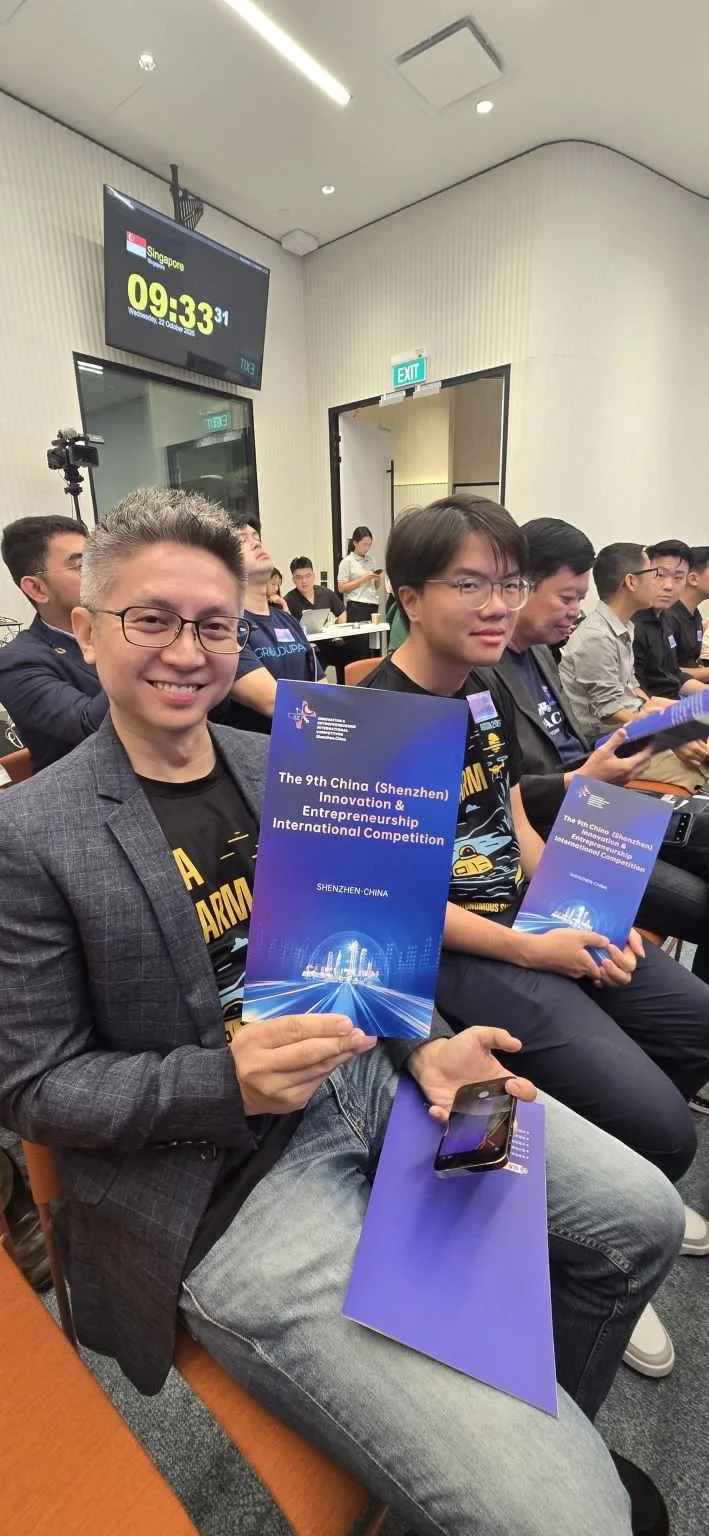
Our Netaswarm team has reached the Global Industrial Track in the Marine Technology category at the 9th China (Shenzhen) Innovation & Entrepreneurship International Competition. This milestone reflects the team’s dedication to exploring how AI-driven robotics and sustainable technology can support the future of our marine and coastal environments.
For the team, the opportunity brings their ideas into a wider conversation: how can better information help us understand changing coastlines, and how can marine technology turn that understanding into practical action?
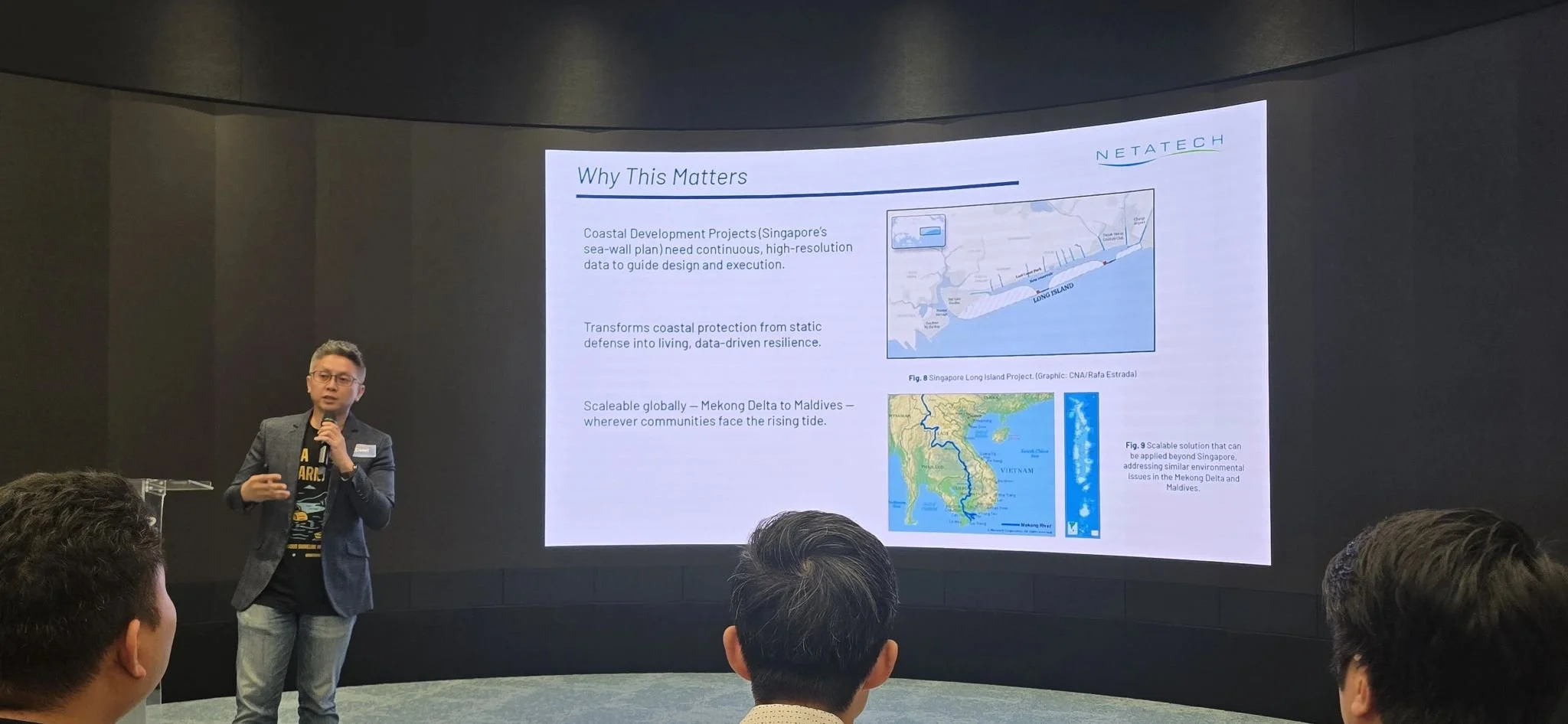
The team’s presentation highlighted the importance of continuous, high-resolution data in guiding coastal development and protection. It explored a vision of coastal resilience supported by ongoing monitoring, where data helps inform decisions as conditions change.
This is a key motivation behind Netaswarm’s work in marine intelligence. By exploring the role of AI-driven robotics in marine monitoring, the team aims to help bridge the gap between collecting information and making it useful for the people planning, managing and protecting coastal environments.
The presentation also considered the potential relevance of this approach beyond Singapore, including coastal communities in the Mekong Delta and the Maldives. These examples reflect an ambition to develop solutions that respond to local needs while addressing environmental challenges shared across borders.
The competition offers an opportunity to share this work with an international innovation community, exchange perspectives and explore possibilities for collaboration.
The occasion also carried significance against the backdrop of the 35th anniversary of China–Singapore diplomatic relations in 2025. It provided a setting to reflect on how cooperation in science and technology can bring people and ideas together around shared goals.
Behind this milestone are the people developing the ideas, preparing the presentation and communicating why the work matters. We congratulate the Netaswarm team on their dedication, creativity and collaborative effort.
Reaching this stage is an encouraging step in their journey. As the team continues its work, the focus remains on a practical purpose: exploring how marine intelligence can support more informed decisions and more resilient coastal communities.
